
Part One: The 1980s

I still remember seeing the VHS tape on the shelf. The cover showed Superman flying up, up and away – almost like he was going to fly right off the cover – carrying half of a nuclear warhead that he had just ripped apart behind him. At age six I didn’t know what a nuclear warhead was. To me it looked like he was carrying part of a rocket ship or something. I didn’t know what was going on but it looked exciting. I was going to spend the night at Mema and Pepa’s, and Mema had told me I could pick out two movies to rent from the video store. My first pick was Harry and the Hendersons. The other was Superman IV: The Quest For Peace.
Today Superman IV is considered the worst Superman movie. They slashed the budget considerably when it was shuffled off to Cannon Films instead of Warner Brothers, and it showed. But six-year-old me wasn’t focused on the production value. I was seeing Superman on the TV screen. I was seeing him fly. I was seeing him fight a super-powered bad guy. I was seeing Lois Lane, Lex Luthor, and the Daily Planet. I have no idea how I knew what any of that was. This was my first time ever watching a Superman movie. How did I already know that he was also Clark Kent? That he fought for truth, justice, and the American way? No clue. I feel like it was already in my DNA somehow. I came out of the womb knowing who Superman was. I think maybe every kid does.
I could tell that the movie was addressing some serious topics that I didn’t fully understand. There are a lot of scenes with world leaders discussing nuclear disarmament and Lex Luthor making shady weapons deals. To me those parts were boring, but I knew they must be important. I loved any time that Clark changed to Superman or vice versa. (Why are people or things changing into other people or things so interesting to kids? The Transformers. The Incredible Hulk. Anything that starts as one thing and becomes something else is fascinating.) The double date scene where Clark and Superman have to somehow have dinner with Lois and Lacy was amazing. It was like the Brady Bunch episode where Peter tries to entertain two different girls in different rooms of the house as he changes in and out of his Dracula costume, but with super powers. Yet even at age six I wondered why Superman was going to all that trouble. Couldn’t he have just said that one of his identities couldn’t make it? He seriously didn’t have anything better to do?
Most of all though I remember Superman’s speech at the end of the movie. The line that stuck with me was, “There will be peace, when the people of the world want it so badly that their governments have no choice but to give it to them.” Maybe it’s an oversimplification. But to a kid, those words out of Superman’s mouth were like Moses coming down the mountain with the commandments. I was innocent and naïve to the harsh realities of the world, but I knew wars happened and that a lot of people always died in them. Seeing Superman, a real, flesh and blood Superman, seemingly admonishing us and offering hope in the same breath, was immensely powerful to my impressionable young mind.
I don’t remember much about Harry and the Hendersons other than it taught me the word “shit,” and when I repeated it I got an angry glare from Mema which is how I found out it was a bad word.

At the Book Fair at school I bought a Scholastic picture book adaptation of Superman IV. There was one notable difference between the film and the book, although since I’d only seen the movie once I didn’t realize it at the time. At the end of the book, Superman flies Jeremy (the young boy who had written him a letter asking him to get rid of all the nukes) high above the Earth so that he can see the world the way Superman does. “I see oceans, and rain, and mountains, and rivers,” Jeremy describes. “But I can’t see where one country begins and another ends. It’s just one world.” This was the first time I ever thought about the fact that all the borders of the different countries on the maps I saw at school were not “real” – they were just ways that we human beings had decided to divide everything up. (It was not until I was older and saw the movie a second time that I realized that that ending was not in the film. It is an unfinished deleted scene that is available on the DVD and Blu-ray versions.)

The first couple of Superman comics I ever had were Man of Steel #5 (1986) and Superman #19 (1988). Both were written and drawn by John Byrne, although at that age I had no concept of the fact that different comics had different writers or artists. To me John Byrne’s Superman was just what Superman looked like.
Man of Steel #5 was part of a mini-series rebooting and retelling Superman’s origin for a new audience. That issue had him fighting Bizarro, his imperfect duplicate. As a kid who was fascinated with the Clark-to-Superman changes, I loved the panel where Byrne drew a sort of “time lapse” of Clark donning his costume while running down the stairs of the Daily Planet. Even better was the image of the confused Bizarro in a kind of half-Clark, half-Superman state that threatened to give away the whole secret identity bit.


The end of that issue proclaimed that the next installment would feature “The Return to Smallville.” Unaware that that was Clark Kent’s hometown, I thought they meant Whoville from Dr. Seuss. Was Superman going to fight the Grinch?! What a crossover that would be!
Superman #19 was part of a new ongoing series that followed the reboot. In that issue Superman’s powers were being mysteriously sapped from him one at a time. There were some great sequences showing this, like when he was in the middle of super-speeding across the ocean and his speed suddenly cut out, sending him plummeting into the water. The issue ended on the reveal of the monstrous villain Dreadnaught, who Superman was now going to have to fight without his powers.
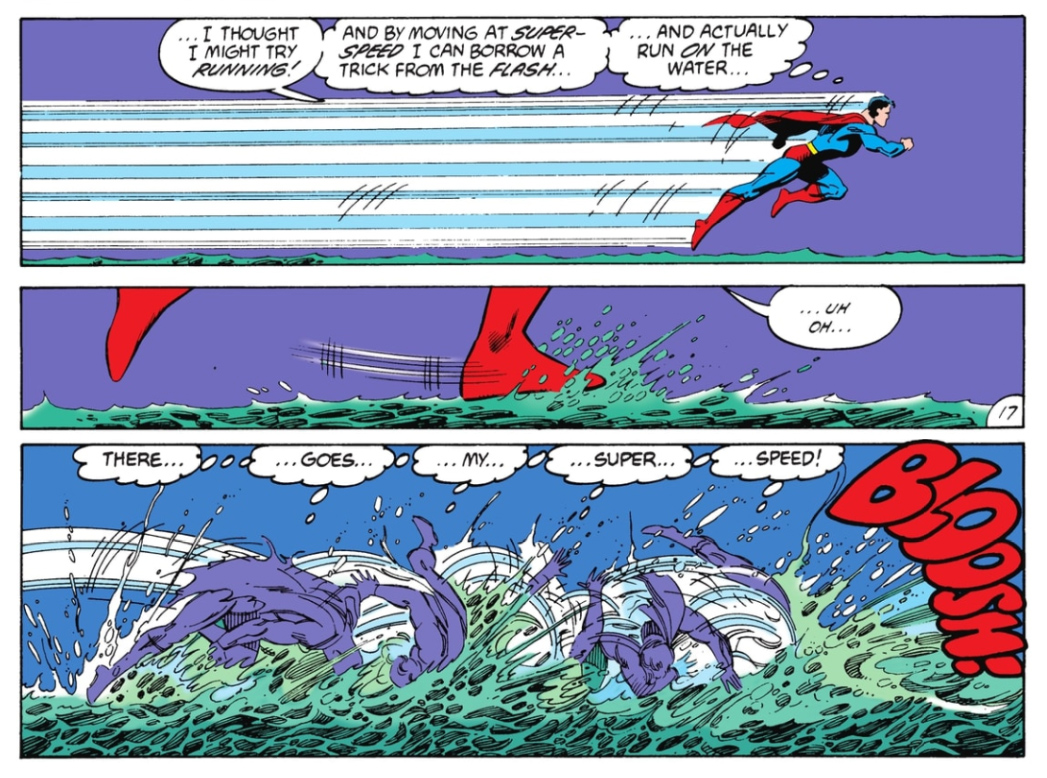

This might be hard to understand if you are not a comic book reader, but there was something magical about not having the whole story. Comics almost always end on some kind of cliffhanger to entice you to buy the next installment. To some people that might sound frustrating. But it also makes the stories and the universe they take place in feel larger than life. You are getting a glimpse into an ongoing saga that is so big that it can’t be contained in a mere 22 pages. It’s been going on long before the issue in your hands, and it’s going to keep on going long afterward. You have only windows into this world. It was captivating.
I wouldn’t read the conclusion to the Superman vs. Dreadnaught cliffhanger until I was in my late teens. The story picked up in Adventures of Superman #442, which was drawn by Jerry Ordway rather than John Byrne. The art looked “wrong” to me. Ordway drew Dreadnaught much smaller than Byrne drew him. The actual story didn’t live up to what had been left to my imagination for over a decade. So it goes.
Part Two: The 1990s

Ironically my interest in the Superman comics really took off when the character died. In the fall of 1992 DC made headlines with a story that saw Superman finally meeting his match, dying in battle against a monster called Doomsday. I remember in the months leading up to that issue there were ads in several DC comics teasing the event, with a silhouette of Doomsday in front of a bleeding “S” logo. This was the first time I was aware of a storyline being promoted in advance like that, let alone one with such a monumental impact. While it’s a common gimmick to boost sales these days, the idea of killing off a main character – especially one as prominent in pop-culture as Superman – was unheard of. Were they really doing this? And how could Superman possibly die without kryptonite being involved? They had my attention.
November 18th, 1992 was the day that the Death of Superman comic came out. Superman #75 came in a sealed black bag with that same bleeding red “S” logo on the front. The evening news showed footage of people literally lined up around the block trying to get a copy from their local comic book shop like it was a big screen TV on Black Friday. Many of them thought that this issue would put their kids through college someday. I just really wanted to read the story.
Imagine my astonishment when I found out that Mema was one of those people who stood in the crazy comic store lines and had managed to procure a copy of the sealed Superman death issue! I could not believe it. She had been intending to get multiple copies, but the comic book store owner told her it was only one per customer. She got one copy and gave it to my dad. (I’m pretty sure Mema was part of the “it’s going to put the kids through college someday” camp. Today you can get a copy for about $20 without much effort.) My dad gave it to me to put in my comic collection for safekeeping. It instantly became the crown jewel of my collection. It remained sealed in its immortal polybag, of course, which only made it more captivating. It was like Superman’s demise was so momentous it was not able to be viewed by human eyes.
I would finally be able to read the story when my dad bought me a trade paperback collection that reprinted the whole Death of Superman saga – not just Superman #75, but the six or seven issues preceding it that chronicled Doomsday’s rampage toward the city of Metropolis. It was the first time I’d read a sequence of issues that all connected like that. Each chapter dovetailed into the next, with the subsequent installment picking up where the previous cliffhanger left off. In a way it was like reading one big 150-page comic.

The final issue was like nothing I’d ever read before. It was all splash pages (full-page illustrations rather than the page being divided up into panels), depicting Superman’s last fight with Doomsday in front of the Daily Planet building. Superman steps away from the battle just long enough to kiss Lois Lane goodbye, knowing he is probably not going to survive this one. The final pages are narrated by Lois in the form of an article she writes about the event. We see Jimmy Olsen trying to keep snapping photos as Superman is losing the fight. We see Jonathan and Martha Kent hugging each other as they watch their son being pummeled to death on live television. On the very last page we see Lois sobbing over Superman’s lifeless body as his torn and tattered cape flaps like a memorial flag in the background. I was 10 years old. I cried. What got me wasn’t the titular hero dying. It was how the story focused on his friends and family seeing it happen. An absolute gut punch.
What followed was my first foray into trying to collect comics “in real time” as they came out. I had originally assumed that after Superman died, that would be it – there would be no more Superman comics. How wrong I was. If anything, they kicked into higher gear than ever. After a brief storyline chronicling the funeral and mourning period of the people of Metropolis, four new Supermen appeared on the scene, one for each of the four Super-titles. (DC was publishing four different series about their flagship character, so that there would be a new issue out each week of the month: Superman, Adventures of Superman, Superman in Action Comics, and Superman: The Man of Steel.) As the “Reign of the Supermen” saga played out, I was desperate to keep up with what was going on. Try as I might, I just couldn’t collect all the issues. I would miss pieces of the storyline, or accidentally read them out of order. In a weird way that made it feel even more epic.
The comics themselves were not enough for me. I had to have anything and everything that tied into this event. I had a poster of the four Supermen in my bedroom. I got the Death and Return of Superman Super Nintendo game. I had the two different novelizations, the Time Warner audiobook cassettes, the trading cards, the action figures. Anything that had to do with the story of Superman’s death and rebirth was a must-have. I was addicted.

Our family had a subscription to TV Guide, and like any self-respecting television-obsessed kid in the 90s I read each issue cover to cover as if it were fine literature. In the September 11 – 17 1993 edition I came across something that stopped me in my tracks. A two-page spread advertising the premiere of a show called Lois & Clark: The New Adventures of Superman. On the left side was Superman, hands on his hips, looking heroic. On the right side, a steamy-looking Lois Lane was snuggled up to Clark Kent – who had no glasses and an “S” tattoo on his bicep for some reason – along with the proclamation that “Your Favorite Superhero Isn’t Just For Kids Anymore.” A TV series about Superman coming along right at the height of my super-fandom seemed almost too good to be true. So many questions went through my mind. What did they mean that it wasn’t for kids? Would I even be allowed to watch it? Would Clark really have a Superman tattoo in this version? If so, wasn’t that very egotistical of him, let alone potentially compromising his secret identity? Most of all I wanted to know if the show would adapt the Death and Return storyline that I was so enamored with. How could they not?
I showed my mom the ad in TV Guide and asked if we could tape the show. (For you younger readers out there, “taping” a show means recording it using a Video Cassette Recorder, a.k.a. VCR.) It was airing on a Sunday night at 8:00 p.m., and since it was a school night I knew I could not stay up that late to watch it, but I was hoping we could record it. My mom said she had been planning to tape the premiere of another new show that night, called SeaQuest DSV. However, knowing how much I loved Superman stuff, she agreed to record Lois & Clark instead. (Thanks Mom!)
The next night we sat down and watched the recorded episode – me, my mom, and my younger brother and sister. (My dad was working nights at this time.) The show opened at the Daily Planet with Lois Lane, Perry White, Jimmy Olsen and the rest of the staff celebrating Lois’s latest scoop – no Clark Kent in sight just yet. It was interesting to see the Daily Planet as a workplace in its own right and not just a setting for Superman to find adventures to get into. Seeing these characters as more than just a superhero’s supporting cast made them feel more real. And speaking of Clark Kent, the first time we see him he is stopping a runaway bus with one hand – in his civilian clothes and glasses. Clark doing super-feats in his everyday duds, something that the show would end up doing frequently, was really cool to me. Previous iterations tended to act like Clark couldn’t perform any heroics unless he was in costume. I thought it made total sense that he would be using his powers constantly for little things here and there that would not necessitate slipping into a phone booth to change outfits. (To be fair, at this point in the pilot episode he did not even have the costume yet. The montage scene where his mother helps him create the super suit is a highlight of not just that first episode but of the whole series.)

The characters all seemed carefully crafted and with more thought put into them than I’d seen before. For example, Perry White was now much more than just the gruff boss who barked out assignments and yelled “Great Caesar’s Ghost!” (In fact he had traded in that expression for “Great Shades of Elvis!”) He was a father figure and mentor who was always ready with some sage advice, usually wrapped up in a story about The King. You could tell he was proud of his staff and protective of them, but also always pushed them to do better. He was a character that I cared about for the first time.
The show’s portrayal of Clark Kent took its inspiration from the John Byrne reboot comics and humanized the character. For most of his history Superman had been “disguised as Clark Kent,” as they said in the intro to the George Reeves TV series. In the movies, Christopher Reeve famously slouched, pitched-up his voice, and acted clumsy as the mild-mannered reporter. Clark was the put-on, Superman was the real deal. Not so anymore. As Dean Cain’s version explained a season two episode, “Superman is what I can do. Clark is who I am.” The most powerful superhero of all was now more relatable.
No character was better represented in my opinion though than Lois Lane. For the first time I understood why Superman would fall for this gal reporter. While Margot Kidder was probably the most recognizable version of Lois prior to this, I had always found her a little bit… abrasive? I didn’t really get what Superman saw in her.

Teri Hatcher’s Lois was different. A smart, confident and tenacious go-getter who would do whatever it took to land a story. She was witty, sarcastic, resourceful, and took pride in being the best. (I hated the running gag of Margot Kidder’s Lois having to ask people how to spell things. It’s a trope that still shows up in the comics sometimes and I cringe every time it does. Lois should be a perfectionist who would be mortified if anyone perceived the slightest flaw in her writing.) She could also be vulnerable, but she hid that side of herself. It’s only when she is at home by herself that she cries into a carton of ice cream while watching a cheesy romance movie, or in a very rare moment of weakness admits to Clark Kent that she’s broken all three of her self-imposed rules of journalism. In many ways she wants everyone around her to think that she’s just as invincible as Superman.
Oh, and it didn’t hurt that Teri was drop-dead gorgeous. One of my first TV crushes, predating Larisa Oleynik’s Alex Mack and Danielle Fishel’s Topanga Lawrence by a year or two.
I was still hopeful that the show would eventually adapt my beloved “Death and Return of Superman” storyline, not having any real concept of how hard that would be to accomplish on a television budget. I even sent a letter to Wizard Magazine (the pre-eminent publication for all things galactic in the 90s) asking if they could pull some strings to help make that happen. My suggestion of who should play John Henry Irons? Denzel Washington. I can only assume that my letter must’ve gotten lost in the mail, because I never got a response.
In general, Lois & Clark and the comics each did their own thing and didn’t overlap much. There was one big exception to this. In October of 1996, the famous super-couple tied the knot. On the TV show, the wedding came in the episode “Swear To God, This Time We’re Not Kidding.” (So named in reference to the fact that Clark had accidentally married a frog-eating clone of Lois the season prior.) In the comics, it came in the form of Superman: The Wedding Album, a special issue with many different past and present Superman writers and artists coming together to contribute to the book. This felt like a big deal. A true change or progression to comic book characters was a rarity, with any big development often being reset or walked back by the next creative team to take things back to basics. Clark and Lois getting married felt different, and not just because the comics and TV show made the effort to align with each other. They had leapt the story forward in a single bound.

In 1997, DC launched a *fifth* Superman comic book series, Superman: The Man of Tomorrow, which only came out on months that had five Wednesdays! Previously, if a month had a fifth Wednesday, that would be a “skip week” for Superman. Now there would truly be a new Superman comic every single week of the year. Even though Man of Tomorrow would only come out roughly quarterly, I asked my parents for a subscription to it for my birthday that year. That title in particular was especially interesting to me because Tom Grummett, my favorite Superman artist from Adventures of Superman, would be picking up art duties there as well, and it seemed poised to pay off some lingering plot threads that had been dangling in the other books.
My mom called and tried to get me a subscription to Man of Tomorrow. (For you younger readers out there, a “subscription” meant sending money to the company in advance and they would mail each new issue right to your house as it came out.) She was told that because it was published so infrequently they did not offer a standalone subscription to Man of Tomorrow, and that the only way to get that one was to subscribe to all four of the other titles and then they would throw that one in for free. My mom bit the bullet and got me a one-year subscription to all of the Superman books. It cost over $100. I could not believe it. I had essentially asked for three or four comics over the course of a year and now I was going to get 52 of them, delivered right to my mailbox for a whole calendar year. Coolest gift ever!
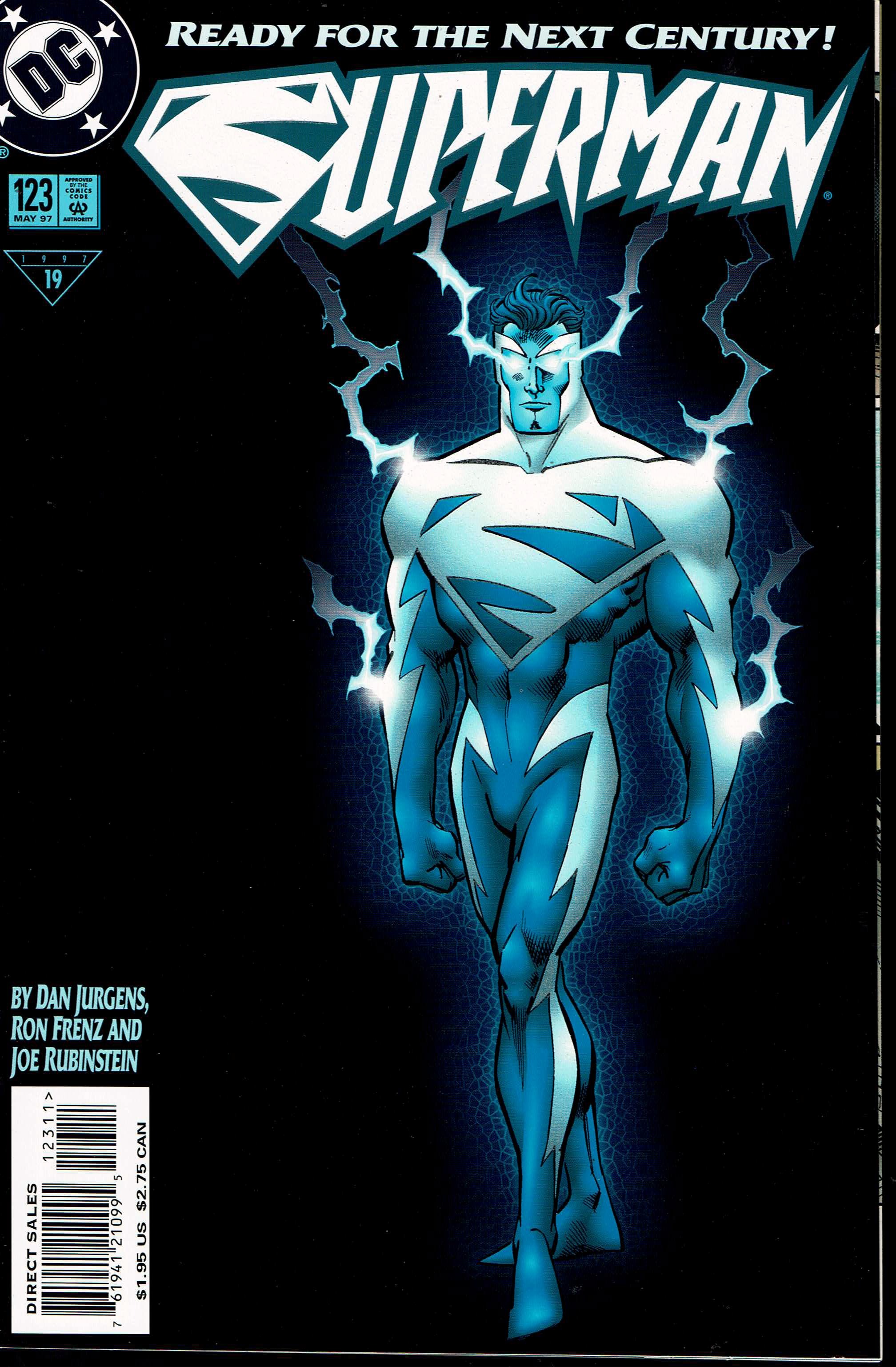
A controversial new storyline kicked off during the course of my subscription. Three words: Electric Blue Superman. Superman got a new costume and a fresh set of powers in what was largely perceived by fans as another stunt to boost sales. DC had been chasing the dragon that was the Death of Superman storyline to diminishing returns, trying to launch another saga that could grab the headlines and get people lining up at the comic shop again. This wasn’t it. The gimmicky nature of this revamp and the fact that it was almost certain to be temporary turned a lot of fans off. But, the fact that it was being delivered to my doorstep every week made it special to me. I felt like I was in on the latest thing, even if I knew it was unlikely to last. Much like Superman IV, Electric Superman was much maligned by most of the fanbase but had a special place in my heart.
Part Three: The 2000s
After my subscription ended my interest in the comic books ebbed and flowed for a while. I would pick up an issue here or there, but I didn’t collect regularly. That changed in the year 2000 when I started going to a comic book store on a weekly basis with my friends Mike and Jeff, stopping in each Wednesday to get the latest issues as they literally hit the stands. It was so exciting to get my hands on each new story right when it became available.
September 12th, 2001, may seem like a strange day to go to the comic book store. It was the day after one of our country’s greatest tragedies, and a time of great uncertainty and pain for America. But I still went. I wanted a sense of normalcy at a time when nothing felt normal. To escape into a world where truth and justice were ideals to always be upheld, and there was always a hero in a colorful costume and cape ready to save everyone that needed saving.
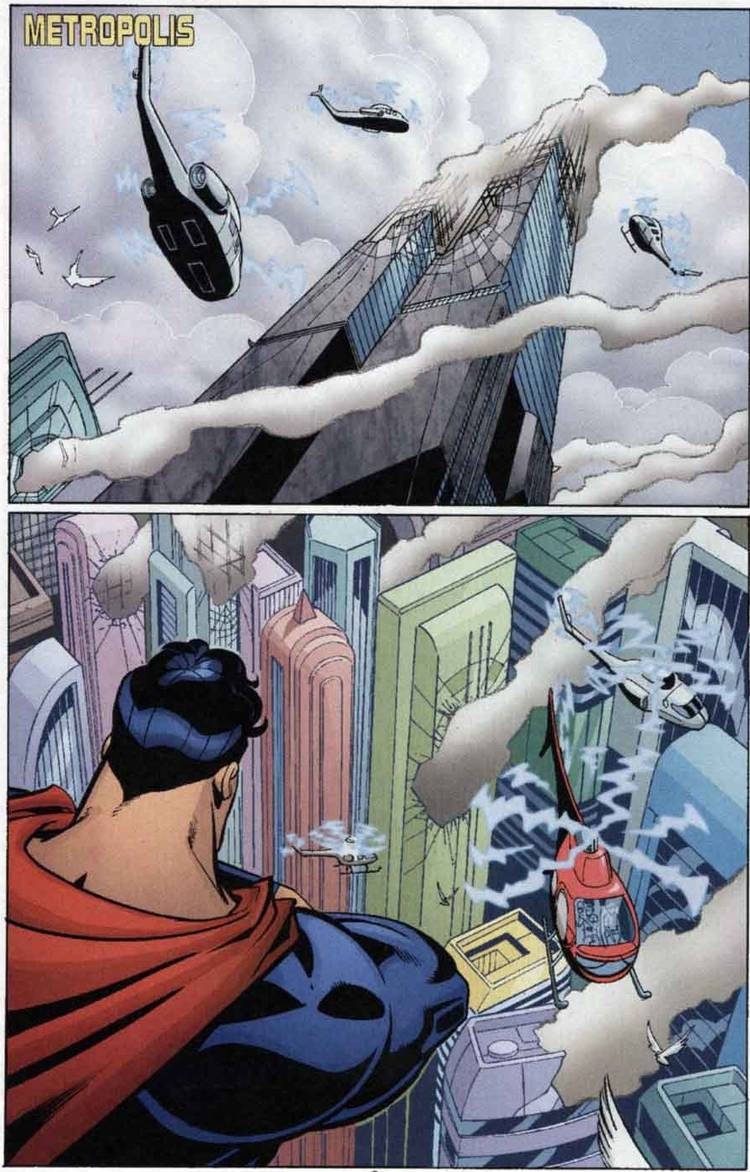
I was shocked when I picked up Adventures of Superman #596 and opened to the first page. It showed Superman hovering in the air overlooking a devastated Metropolis – including smoldering holes in what looked very much like the Twin Towers. In the aftermath of DC’s “Our Worlds At War” storyline, this very evocative image just happened to hit the stands one day after the tragedy in NYC. It was horrifying, yet there was something about it that felt viscerally important. As if Superman had been impacted by the tragedy too. Make no mistake, if the writers had intentionally incorporated 9/11 into the comics somehow, it would’ve felt fake, forced, and tone-deaf. But because it happened as such an unbelievable coincidence, it felt like the fictional world and the real one had somehow briefly aligned.

In the aftermath of “Our Worlds At War,” Superman adopted a black and red version of his “S” instead of the classic yellow and red. It was his way of mourning those who had died. Again, this was something that was scripted, drawn, and sent to the printer long before 9/11. But somehow it felt like Superman was letting us know that he was right there with us.

In October 2001 a new version of Superman’s origin story started playing out on a weekly basis. The TV series Smallville (not Whoville) was about a young Clark Kent who was still in the “no flights, no tights” era of his career. The new show came at a time when I had just finished high school myself, so seeing Clark Kent going through many of the same milestones and rites of passage that I just had felt especially relevant to me. We would tape the show and then watch it on the weekend as a family, usually getting pizza for dinner for what we came to call “Pizza and Smallville nights.” Something about watching it with my family, when so much of the show’s early years centered around Clark’s relationship with his parents and friends, felt really special. The series found a way to appeal to multiple audiences with a single bound. Not only did it have its fair share of action and adventure, but it was also a coming-of-age story with a lot of heart. Clark’s lessons about life, love, and loss were just as important as how he mastered his x-ray vision. It was a superhero show with a family drama as its secret identity.

In 2002 I got a tattoo of the Superman “S” logo. It was partially because of how much I liked the character, and partially because of how much I liked a girl. Stacy and I had met years earlier in an online chatroom devoted to Lois & Clark. A girl who liked Superman? That seemed almost harder to believe than a man who could fly! Stacy and I dated on and off for a few years. In May of 2002, the day after her senior prom, we went and got matching “S” tattoos together, hers on her lower back, mine on my left bicep. They were a perfectly imperfect match – the tattoo artist had forgotten to include the tiny yellow triangle at the upper right crest of the S on both of our tats. (I hid the tattoo from my parents for months, until a family vacation and a dip in a hotel hot tub made it impossible to conceal.) My relationship with Stacy ended in 2003. I did not regret the tattoo, but the “S” would carry dual meanings for me for quite a while.
In 2006 Superman returned to the big screen with the appropriately titled Superman Returns. I had mixed feelings about this movie and the timing of it. I was so enamored with Smallville that I felt like it would only have been logical to let that show complete its run, then follow it up with a movie starring Tom Welling as a fully grown Superman who finally got to don tights and take flights. How cool would it be for the origin we’d spent years watching unfold on TV pay off in a big-budget film? I felt they could’ve easily done it in a way that was still accessible for those who didn’t watch the show, but that had an extra impact for those who did.
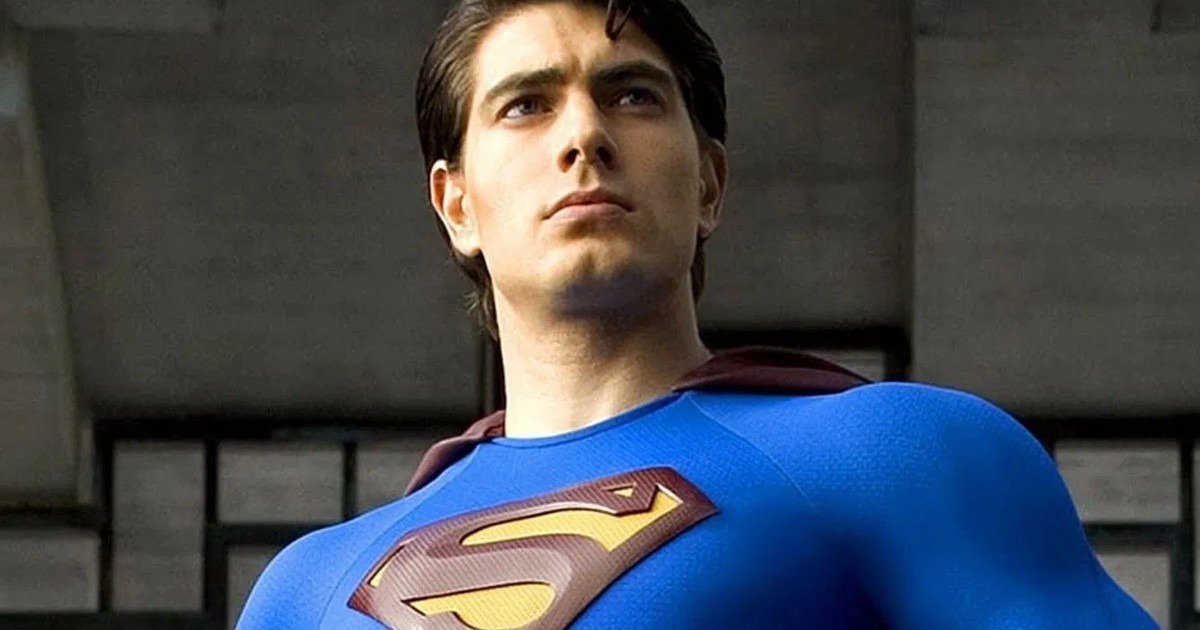
Instead of leaping from television to the big screen, Superman Returns paid homage to a different version of the Man of Steel. Director Bryan Singer’s movie starring Brandon Routh was essentially a love letter to the Christopher Reeve films, serving as its own sort-of-sequel (“in-between-quel?”) to that series.
I saw it twice in the theater. The first time was on opening night, with my girlfriend (now wife!) Amanda and our friends Pam and Tom. The theater was packed. Now I knew that the film was taking its inspiration from the Christopher Reeve era. But I was not prepared for those first few notes of the John Williams theme, or seeing the opening credits whoosh onto the screen over the black outer space background. There were audible “oh!” gasps of recognition from the crowd, myself included. Being in a full theater and seeing that classic introduction on the big screen was a moment I will never forget.
My second viewing was a couple of weeks later. I had the day off from work, and on a whim I decided to go see the movie a second time. It was in the middle of the day on a weekday and I went to a smaller theater than the one we’d gone to for the premiere. I ended up having it all to myself. That’s right, I was the one and only person in the theater. What an incredible contrast, seeing the movie first with a big crowd on opening night and then seeing it completely solo. Both were magical in different ways. I got up and changed seats a few times just because I could. At one point I went all the way up to the very front and reached up and touched the screen. It was surreal. The rest of the world disappeared as I had my own private showing. I Spent The Afternoon with Superman.
Part Four: The 2010s

In 2011, DC initiated a line-wide relaunch of all of their comic series to try to entice the proverbial new readers. Dubbed “The New 52,” decades of continuity were jettisoned to give each character a clean start – at least in theory. Many of the titles decided to pick and choose what still “counted” in each character’s backstory, although this was often murky territory that made things more confusing rather than less. Clark Kent was now younger, less experienced, and portrayed as a down-on-his-luck loser who could barely pay his rent. One reader who was quoted in a cbr.com article described Clark as a “homeless hipster,” which wasn’t quite accurate but not too far off. Superman was now wearing an overly complicated armor-like suit, which seemed bizarre for a guy who is known for being invulnerable. Superman was no longer married to Lois Lane, and instead had a hot and heavy romance with Wonder Woman. (When asked in an interview when he thought Clark and Lois would get back together, writer Geoff Johns said that, as far as he was concerned, they never would.)
In short, I no longer recognized this character.
I gave this new era a chance. But after about a dozen issues, I knew it just wasn’t for me. Maybe it was a jumping-on point for new readers, but I decided it was a good jumping-off point for me. I stopped collecting Superman comics.
In 2013, Superman flew back to the movie screen in Man of Steel, starring Henry Cavill and directed by Zack Snyder. I had high hopes for the film, as Snyder had previously directed 300 and Watchmen, two other comic-to-film adaptations that were immensely faithful to the source material and had a distinct and gorgeous visual style. Christopher Nolan, who had directed the Christian Bale Batman movies, was also involved as a producer and co-writer. How could this possibly be anything less than incredible? After some plans to see it with my brother fell through I ended up going solo and seeing it by myself, because I didn’t want to risk hearing any spoilers about it.
For most of the movie’s runtime I liked but didn’t love it. Something felt “off.” Maybe it was that it leaned a bit farther into sci-fi territory than most other iterations of the story. Sure, he’s an alien from another planet who can fly and shoot laser beams from his eyes, but this version was very heavy on the Kryptonian backstory and had an invasion from General Zod and his army as the central conflict. Maybe it was the odd metallic blue tint that seemed to make everything look dour and overcast. Maybe it was Jonathan Kent, the man from whom Clark inherits his moral compass, suggesting that Clark should’ve let a bus full of school children drown rather than risk exposing his secret.
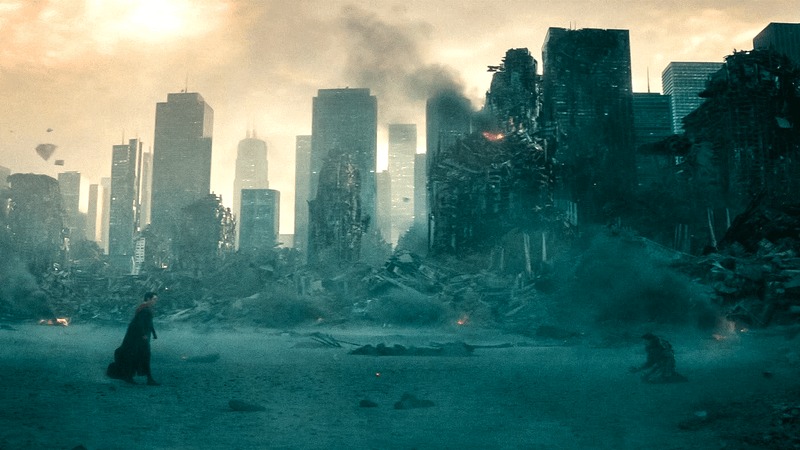
In the movie’s final act, Superman is fighting General Zod in a devastated Metropolis where buildings have toppled over and dust and debris hang in the air like 9/11 on steroids. Zod is about to vaporize a terrified family with his heat vision. I wondered if Superman was going to throw his hands over Zod’s eyes like he did to Darkseid in a pivotal episode of Superman: The Animated Series.
Instead, Superman snaps Zod’s neck, killing him.
I was stunned. I felt stick to my stomach. I was about to walk out.
The only reason I stayed was I wanted to see if there was some kind of twist. Was Superman going to reverse time like he did in the first Christopher Reeve movie? Was he going to exile himself from Earth like he did in the comics in the 1980s?
No. The next scene, played for laughs, had Superman knock a satellite out of orbit so the government couldn’t track him, and a female soldier said he was “hot.”
Where had my Superman gone?
DC won me back as a comic book reader in 2016 when they launched their “Rebirth” line. In an attempt to course-correct from the New 52 (I was clearly not the only reader who felt alienated by that reboot), they brought back a lot of the elements that they’d previously pivoted away from. Dan Jurgens, one of my favorite writers from the “Death of Superman” era, returned to write Action Comics, and Peter Tomasi and Patrick Gleason took over the Superman series. The “old” Clark Kent and Lois Lane from the pre-New 52 era returned via a multiversal crossover adventure, not only still married but now raising a young son named Jon. At this point in my own life I was now married with two kids of my own, so seeing Clark and Lois as parents meant the world to me. It made me relate to my favorite characters more than ever.

One issue in particular captured my heart. In issue 7 of the new series, Lois and Clark take Jon to the state fair. Clark promises an evening of no superheroics, leaving the cape at home in favor of a night out with his family. The issue was light on action but big on the Kents as characters, letting them experience a night of fun. (Clark doesn’t break his promise, but he does bend it a little, making for a great ending.)
I absolutely loved this era of the comics. “My” Clark and Lois were back, one of my favorite writers was penning their new adventures, and I was getting to see them as parents. I honestly felt like they were making these comics just for me. I think a lot of other people did too.
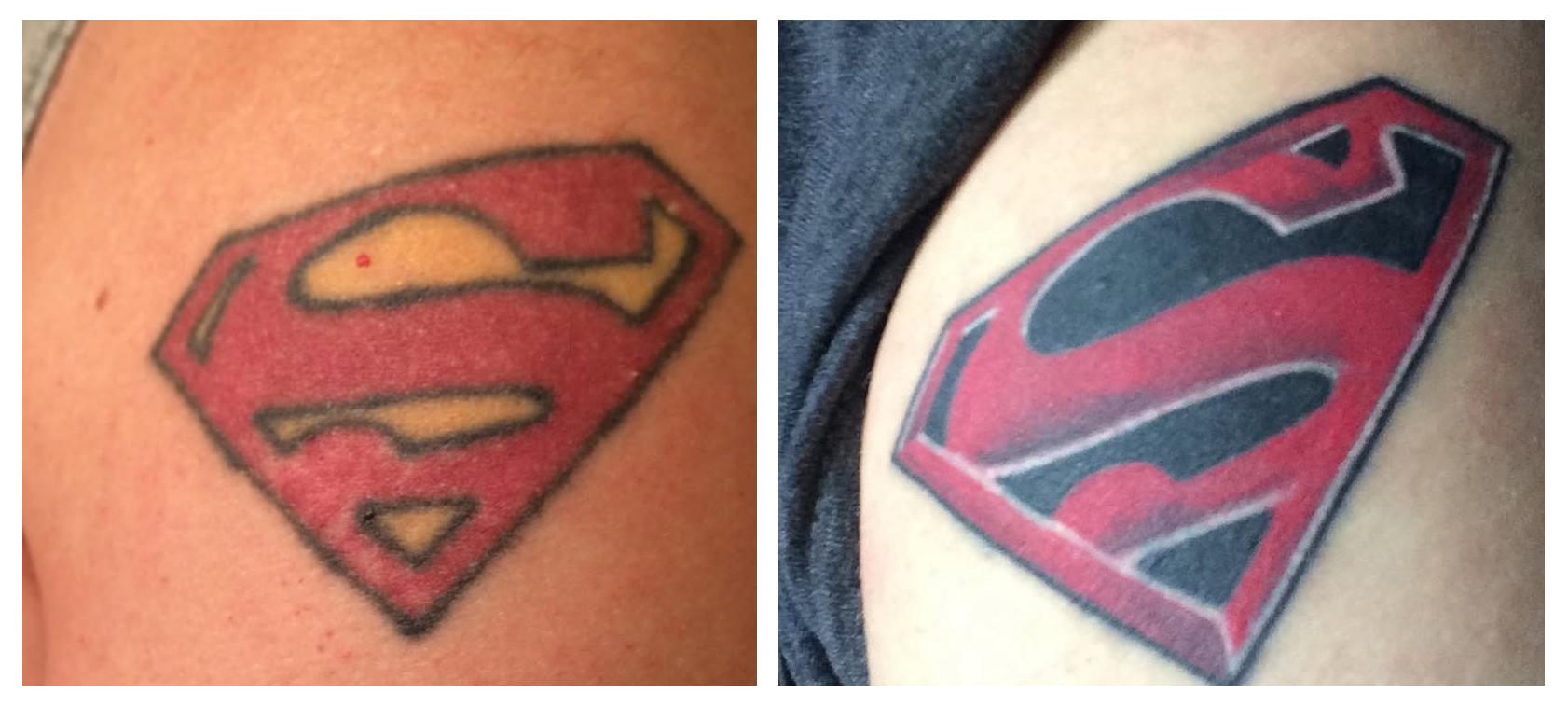
By the summer of 2019 my “S” tattoo was looking quite faded, and there were a couple of spots that had become discolored and now looked just blotchy. It had been two decades since I got it as a matched set with my galactic girlfriend. It still had a lot of meaning to it, but I felt like it was time to give it an update, both in terms of how it looked and what it meant. I had it redone. I found an amazing artist who not only freshened up my tat, but gave it new life by adding some shading and a little bit of white around the edges to give it depth. At my request she also filled in the yellow with black, much like when Superman added black to his “S” after “Our Worlds At War.” At this time in my life I had overcome a long struggle with Crohn’s disease, achieving victory over that vicious illness only by having my entire colon and rectum surgically removed. I was also battling anxiety and depression. The black represented these struggles. Incorporating them into the “S” symbolized the fact that this adversity had not made me weaker. It had made me stronger.

Almost as if the universe was giving me a nod of approval, in late 2019, several months after I’d gotten my tattoo updated, Brandon Routh returned to play Superman on the CW’s “Crisis on Infinite Earths” crossover. He wore the red and black S. It was an homage to the storyline “Kingdom Come,” not “Our Worlds At War,” but it was still the first time that version of the logo had been portrayed in live action. Lois (Bitsie Tulloch) asked Routh’s Superman why he’d added black to the shield.
His response: “Because, Lois. Even in the darkest times, hope cuts through. Hope is the light that lifts us out of darkness.”
Part Five: Today and Beyond

As I write this in 2025, the first teaser trailer for James Gunn’s new movie Superman was recently released. Due out in the summer, the film features David Corenswet as Superman, Nicholas Hoult as Lex Luthor, and Rachel Brosnahan (Mrs. Maisel) as Lois Lane. I have a feeling Brosnahan is going to absolutely own that role. Just from a quick image in the teaser of her with a cup of coffee in one hand and a copy of the Daily Planet in the other, I thought to myself, “That IS Lois Lane.”
The teaser doesn’t give away much, and only has six spoken words of dialogue. Instead, it builds the mood via lots of imagery and a newly arranged version of the classic John Williams theme. With Gunn (of Guardians of the Galaxy fame) directing, it’s almost certain to be full of action, humor, and heart. Maybe that’s just what we need right now. I’m hoping it’s a movie I can take my kids to, assuming they want to see a Superman movie with their old man.
If you asked me what my favorite version of Superman is, it would be difficult, maybe even impossible, to point to just one. Christopher Reeve feels like the “real” Superman to me, like the guy from the comics actually came to life. Dean Cain is my favorite Clark Kent because he made him feel like a person and not a put-on; a character rather than a caricature. Tom Welling, despite not wearing the tights, embodied the heart and soul of the character for a full decade and gave us more “save the day” moments than any other version. I guess maybe I could say that Chris is my favorite Superman, Dean is my favorite Clark, and Tom is the perfect blend of both.
There are many more stories I could tell here. The time I had a film that I made screened at The Superman Celebration in Metropolis, Illinois. Going to comic conventions and getting to meet Dean Cain, Teri Hatcher, Tom Welling, Michael Rosenbaum, Brandon Routh, Margot Kidder, Noel Neill and so many more. Meeting my future wife, Amanda, while I was dressed as Superman at a Halloween party. Getting to write columns for The Krypton Club Newsletter and KryptonSite. Being a guest speaker at my local library to talk about the history of Superman in movies and TV. The list goes on. Maybe I’ll write about some of them another time. That’s what’s so great about Superman – there will always be more stories to tell. The battle for truth and justice is a never-ending one.
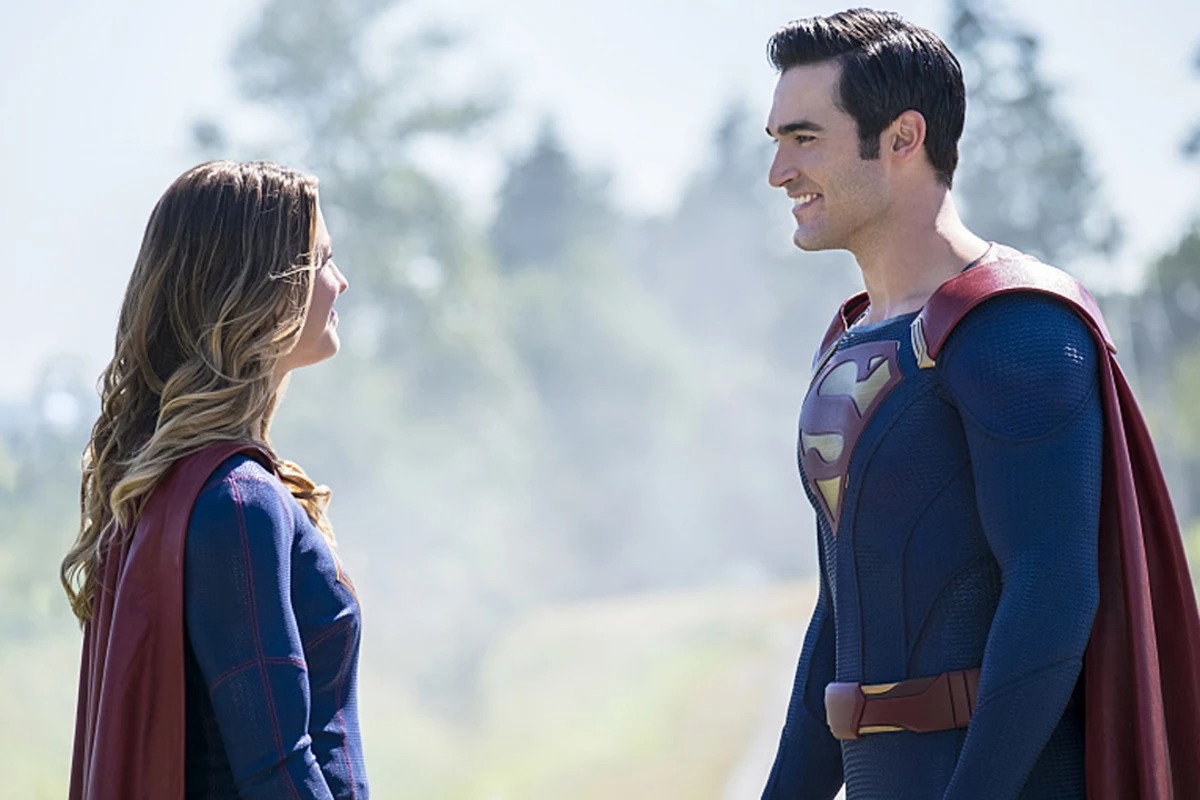
In the Supergirl episode “The Last Children of Krypton,” Supergirl (Melissa Benoist) says goodbye to her cousin, Superman (Tyler Hoechlin) at the end of a team-up adventure. “Khao-shuh,” she says, bidding him farewell in their native Kryptonian language. When their friend Winn asks what it means, they explain that there’s not a direct translation of the expression in English.
The closest equivalent, they say, would be… “To Be Continued.”
Russ Dimino is the author of Spilling My Guts: A Crohn’s Chronicle.
 Despite Reality